
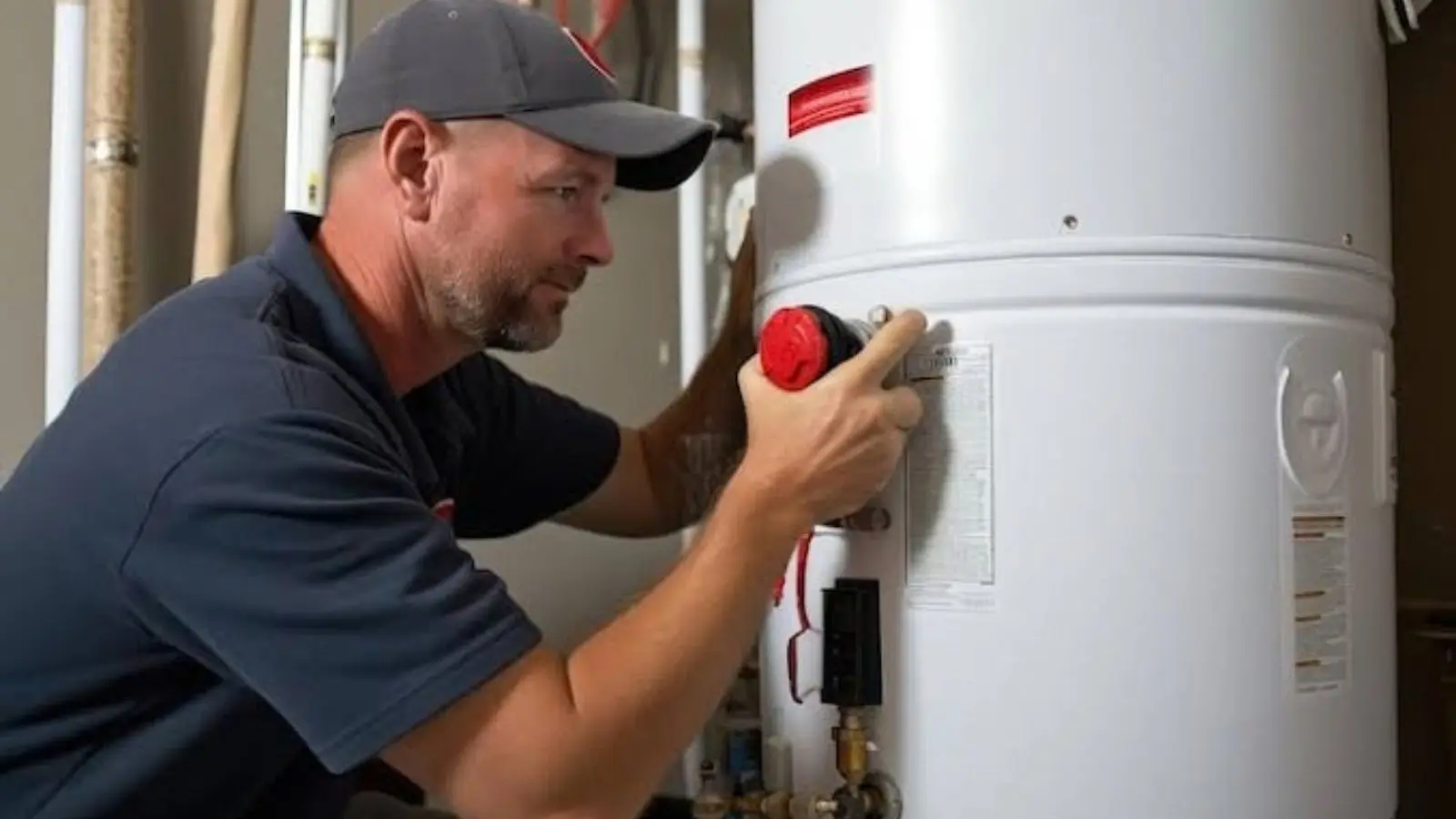
Pick the right size before you pick a brand
Sizing follows your peak hour demand, not the number of bedrooms. A 40 gallon tank works for one or two people, a 50 gallon unit suits most families of four, and larger homes with soaking tubs often want 65 gallons or a tankless setup. First hour rating on the yellow label matters more than the nominal gallons.
We ask how many showers run at the same time, whether you have a large tub, and whether a dishwasher and laundry run during mornings. Those answers set the size.
How a scheduled installation runs
A normal tank installation follows five stages, and each stage has a check you can watch.
Site check
We confirm gas line size, vent path, floor drain and clearance.
Shutoff and drain
Water and fuel are shut off and the old tank is drained.
Set and connect
New unit goes on a pan, with flex connectors, shutoffs and a relief valve line.
Fuel and vent
Gas lines get a leak test and vents are checked for draw.
Fill and test
Tank is filled, purged, lit and checked for leaks and temperature.
Details a clean install should include
These are the small items that separate a clean install from a rushed one.
- A pressure relief valve with a discharge pipe that ends where water can be seen, not into a wall.
- An expansion tank when your plumbing is a closed system with a pressure regulator or backflow device.
- Dielectric unions or flexible connectors where copper meets steel.
- A drain pan and, where possible, a path for water to leave the room if the tank fails.
- Combustion air and a vent pipe sloped and sealed to the manufacturer's instructions.
Tank, tankless and heat pump at a glance
Use this as a starting point. We adjust it to your utility room and your gas or electric service.
| Type | Upfront cost | Running cost | Typical life |
|---|---|---|---|
| Standard tank | Lowest | Moderate, steady standby loss | About 8 to 12 years |
| Tankless gas | Higher, plus vent and gas work | Lower for small households, see tankless service | Often 15 to 20 years with flushing |
| Heat pump | Higher | Lowest in many homes | About 10 to 15 years |
Lifespans are manufacturer ranges and depend heavily on maintenance and water quality.
Permits, inspections and utility notes in Pleasant Grove
Fuel changes, new gas runs and new venting often need a permit and inspection. Permit rules vary by job, so ask the Pleasant Grove building department what yours requires. Gas service in Utah comes from Enbridge Gas Utah, and any suspected leak should go to 911 and Enbridge at 1-800-767-1689 first.
Garage installs also deserve a look at freeze exposure and vehicle impact. Bollards or a raised platform are inexpensive protection, and a plumber can add them during the install visit.
What decides the installation price
Planned installs are easier to price than emergencies. These factors set your number.
Rebates and insurance
Some utilities and manufacturers offer rebates for high efficiency units, and these change often. Ask the dispatcher and check your own utility pages. Insurance does not pay for planned upgrades.
For a real quote, call (385) 488-1892 with the size and fuel of the unit you have now, and mention if you want a tankless option priced beside the tank.
What an inspector looks at on a new install
Utah applies the International Plumbing Code (IPC) statewide, with state amendments, under Utah Code Title 15A, Chapter 3, Part 3. An inspector commonly checks the relief valve and its discharge, the venting on a gas unit, thermal expansion control where the system is closed and whether the appliance was installed to the maker's instructions. Permit rules vary, so ask the Pleasant Grove building department.
Pick your install day
Call to compare options and get a clear price before anything is ordered.
Installation questions
A same-fuel tank swap usually takes a few hours. Moving to tankless, changing fuel or rerouting venting can take most of a day.
Permit rules vary by job, so ask the Pleasant Grove building department. We tell you up front if your install is likely to need one.
A family of four typically uses a 50 gallon tank, but the first hour rating and your peak demand decide. Households with multiple showers or large tubs should talk through demand with the plumber.
Often yes, but it means new supply lines, a new vent path for gas units and sometimes new drain access. The plumber prices the move as a separate line.
Yes, the old tank leaves with us after it is drained and disconnected.
If your system is closed by a pressure regulator or backflow device, an expansion tank protects the heater and fixtures from thermal pressure spikes. The plumber can test your pressure and tell you.