
How an underground gutter drain works
A buried gutter drain is a plastic pipe, often corrugated black or solid white, that connects each downspout to a common line. The line runs downhill to a pop-up emitter in the yard, a dry well, a curb outlet or a storm drain. Gravity moves the water, so a slope of at least a quarter inch per foot matters.
Because the pipe is buried, nothing warns you until water backs up. That is why one overflowing gutter during a storm is often the first sign.
Why underground drains clog
Most clogs trace to a short list of causes, and the debris tells you which one it is.
- Leaves, needles and granules from roof shingles that wash into the downspout.
- Roots that enter at a joint or a crack, common near mature trees.
- Sediment that settles in a flat or bellied section.
- A crushed pipe from a vehicle or heavy equipment over a shallow line.
- An outlet blocked by soil, ice or a pop-up emitter that is stuck shut.
How to flush a simple clog
Start with the lowest-risk method and work up.
Disconnect
Remove the downspout elbow so you can reach the pipe opening.
Hose it out
Push a garden hose into the pipe and run water to flush debris toward the outlet.
Snake it
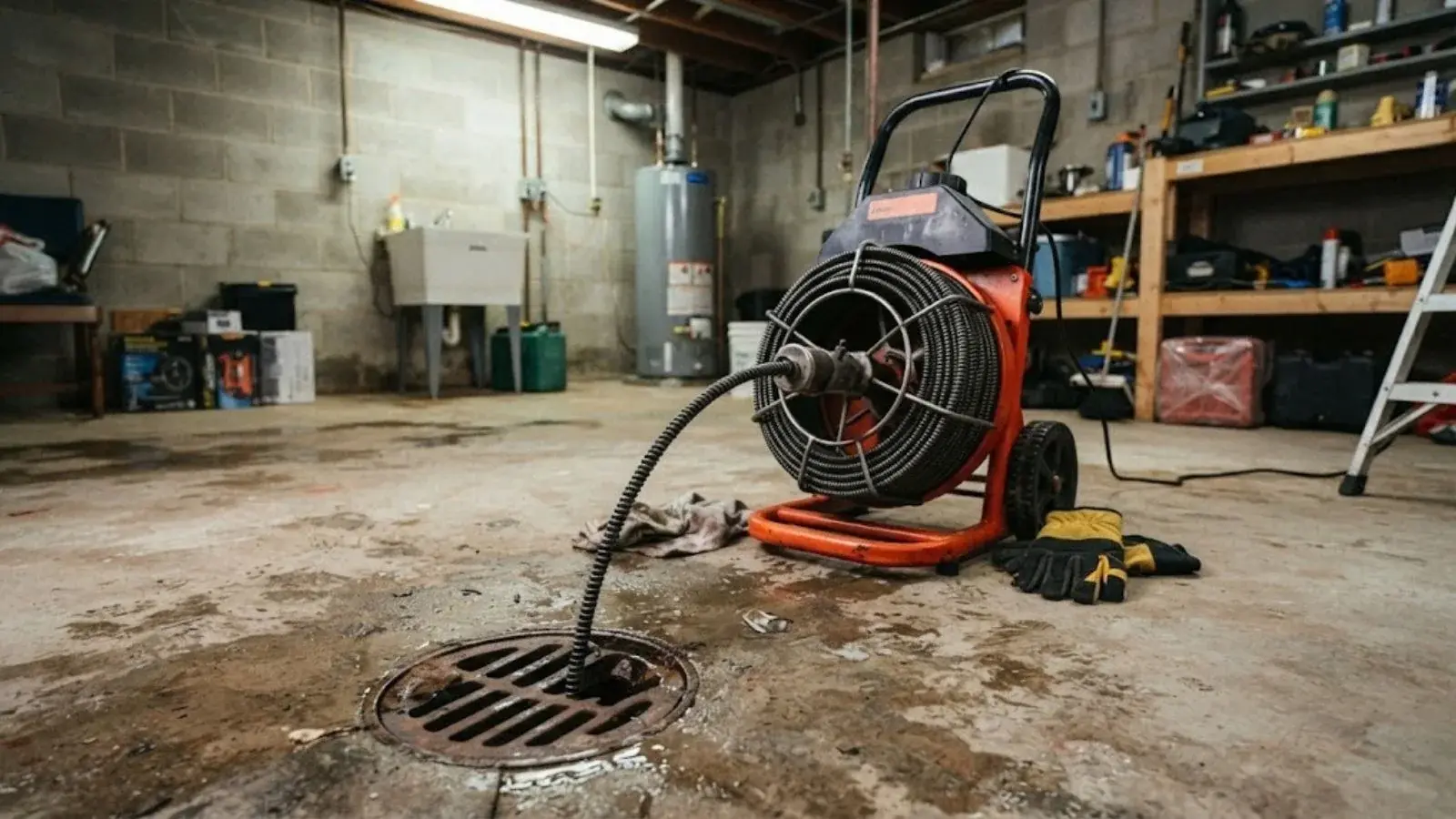
Feed a drain snake or a plumber's auger and cut through the blockage.
Test
Run water and check that it reaches the outlet and flows freely.
DIY or plumber
Some clogs respond to a hose. Others need more.
| Situation | Try yourself | Call a plumber |
|---|---|---|
| Water backs up after leaf fall | Hose and snake | If it clogs again within weeks |
| Water backs up and stays | Not recommended | Camera to find a crush or root |
| Standing water near foundation | Extend downspouts | Check drainage and sump, see sump pump repair |
| Outlet buried or iced over | Clear the outlet | If the line is frozen, call |
Foundation water in Pleasant Grove
Pleasant Grove sits at the foot of the Wasatch Range, and heavy storms and spring snowmelt can send a lot of water toward homes on the bench. A blocked roof drain dumps that water beside the foundation, and a basement can take it in. Many basement seepage problems start with gutters and grading, not groundwater.
If water already enters the basement, read about basement waterproofing to see how drains and pumps fit together.
Local rule worth knowing
Roof water should not run onto a neighbor's lot or into the sanitary sewer. Utah cities, including Pleasant Grove, set rules for storm water, and a downspout connected to the sewer line can overload it. Ask Pleasant Grove public works about local rules before you reroute a drain.
Source type: City of Pleasant Grove public works and stormwater guidance
Keeping gutter drains open
Clean gutters in late spring and after leaf fall, and install screens or guards if you have mature trees. Check the outlet each season and keep it clear of soil and weeds. Pour water into each downspout once a year to confirm it flows.
If you serve a property in Lindon or American Fork, see our pages for Lindon and American Fork, since runoff and soils differ by neighborhood.
What you need to flush a drain yourself
Most homeowner flushes need only basic tools, and a few minutes of setup.
- A garden hose with a nozzle that fits the pipe opening.
- A drain snake or a plumber's auger long enough for the run.
- Work gloves, because debris is wet and sharp.
- A bucket or tarp to catch leaves and silt.
- A flashlight to look into the pipe and the outlet.
Why a camera pays off for stubborn clogs
If a drain clogs again within a season, guesswork gets expensive. A small camera on a flexible rod shows whether the cause is a crushed section, a root, a joint that has separated or just silt in a flat run. Each calls for a different fix, and you avoid digging the wrong spot.
Ask the plumber for the footage and the distance from the downspout to the defect. With that, a repair can open a small patch of lawn instead of a long trench.
A simple yearly routine for gutters and drains
Plan three short checks each year. In late spring, clean gutters after the cottonwood and tree debris falls, and flush each downspout with a hose. In early fall, clear gutters again before leaf drop ends, and check the outlet or emitter for soil and weeds.
Before the first hard freeze, make sure the outlet drains so it does not hold standing water that freezes and blocks the pipe. Each check takes less than an hour, and together they keep roof water away from your foundation.
The one thing to check this week
Pour a bucket of water into your downspouts and watch where it goes. If it backs up, drains slowly or never appears at the outlet, you have found a problem before a storm does. Flush it with a hose, and call a plumber if it clogs again.
A few minutes now keeps roof water from soaking your foundation later.
Gutter drain questions
A jetting hose can work, but too much pressure can damage thin corrugated pipe. A plumber with a jetter and a camera is safer for a long run.
It depends on the home. Common outlets are a pop-up emitter in the yard, a dry well or the curb. A plumber can trace it.
A partial clog or a flat section may carry light flow but not storm flow. A camera can find the restriction.
Yes. Roots follow water through joints, especially in older corrugated pipe near trees.
Generally no, since storm water can overload the sanitary system. Ask the city before connecting or rerouting.
About a quarter inch per foot is a common minimum. A flatter run may collect sediment.