
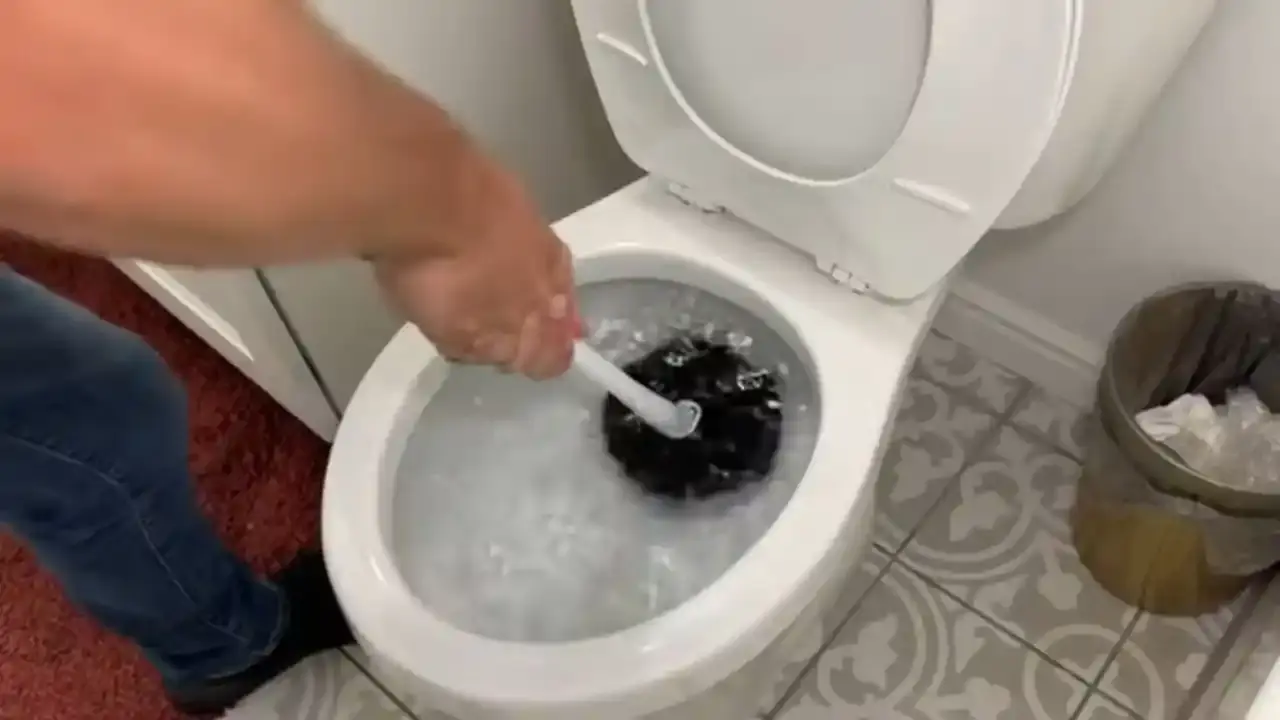
Stop the water before you try anything
The most important move is the one people skip. Take the lid off the tank and lift the float or push the flapper down, then close the shutoff valve on the wall behind the toilet by turning it clockwise. That stops more water entering the bowl while you work.
Do not flush again to test it. Each flush adds a tank of water, and a bowl that is already near the rim will spill. Put a towel on the floor and keep children and pets out of the bathroom.
Five fixes that work without a plunger
Try these in order. Most single-fixture clogs of paper and waste respond to the first two.
- Squirt a quarter cup of dish soap into the bowl and wait fifteen to twenty minutes so it coats the clog.
- Pour a pot of hot tap water, not boiling, from waist height into the bowl.
- Use a bent wire hanger with the end wrapped in a rag to feel for a lodged item and break it up.
- Put on gloves and remove any toy, brush or other object you can see and reach.
- Try a wet and dry shop vacuum on wet mode, which can pull a clog back up.
Why dish soap and hot water help
Dish soap lubricates the pipe surface so that a soft clog slides through the trap. Hot water softens toilet paper and waste and loosens grease. Boiling water can crack the porcelain, so use water that is hot from the tap, not from the kettle.
This works on paper and waste. It does not move a solid object like a toy or a wad of wipes. If the bowl does not drop after two attempts, stop and read the next section.
Things not to do to a clogged toilet
Some fixes make the problem worse or damage the toilet.
| Do not | Why |
|---|---|
| Pour in chemical drain opener | It can sit in the bowl, burn skin and damage pipe finishes |
| Flush repeatedly | Each flush adds water and can cause an overflow |
| Use a drain cleaner with a plumber on the way | It exposes the plumber to caustic water |
| Push a stiff wire hard | It can scratch the porcelain or push a clog deeper |
When it is not just the toilet
A clogged toilet that is the only fixture affected points to the trap or the short line below it. Water that backs up in the tub when you flush, or gurgling in the sink, points to the main line. In that case a home fix will not help, and every flush adds waste to the problem.
Stop using water in the house and call. Our sewer line cleaning service opens the main line, and a camera shows why it blocked. Repeated clogs in one toilet may also need a drain cleaning visit to clear the line beyond the trap.
Pleasant Grove homes and sewer lines
Pleasant Grove homes connect to city sewer mains, and wastewater from the city is treated by the Timpanogos Special Service District. If a clog affects only your house, the private lateral is the likely cause. If neighbors on your street also report slow drains, call Pleasant Grove public works as well as a plumber, since the city main may need attention.
Source type: City and district wastewater service information
How to keep toilets from clogging
Only human waste and toilet paper belong in a toilet. Wipes sold as flushable do not break down in sewer lines, and they are a common cause of clogs. Feminine products, cotton balls and dental floss also catch in pipes.
Keep a plunger under the bathroom sink. A flange plunger costs a few dollars and clears most simple clogs in seconds. If you are near Lindon or American Fork and a clog recurs, our pages for Lindon and American Fork explain how the same line is served.
What to do once the bowl clears
Once the water drops, flush once with the lid up so you can watch the tank refill and the bowl empty. A strong, quick swirl means the trap is clear. A weak flush that leaves the bowl rising slowly means a partial clog is still in place.
Wipe up any splashed water with a disinfecting cleaner, and wash your hands well. Toilet water carries bacteria, so throw away gloves and rags rather than reusing them.
A small kit that prevents the next emergency
A few cheap items turn a stressful clog into a two minute job.
- A flange plunger, not the flat cup type, which seals better in a toilet bowl.
- A closet auger, sometimes sold as a toilet snake, for clogs a plunger cannot move.
- A pair of rubber gloves and a roll of paper towels.
- A flashlight, so you can see into the bowl and under the tank.
- The number for the 24/7 plumber line saved in your phone.
Clogged toilet questions
No. A mop head does not create the seal a plunger needs. Dish soap and hot water, or a wire hanger, are better choices if you have no plunger.
It is safe but rarely strong enough to clear a real clog. It may loosen a soft film, but soap and hot water are more effective.
If the bowl does not drop after two tries or other fixtures back up, call. An overflowing toilet is an emergency, and our 24/7 line handles it.
Sometimes a soft clog dissolves over a few hours if you leave the bowl alone. A solid object will not, and waiting can lead to an overflow if someone flushes.
Low-flow models, older pipes with roots and an unusual trap shape can cause more clogs. A plumber can check the line with a camera to find the cause.
The city maintains the main in the street. Clogs inside your house and on your private lateral are your responsibility, though public works can confirm if the problem is on the main.