
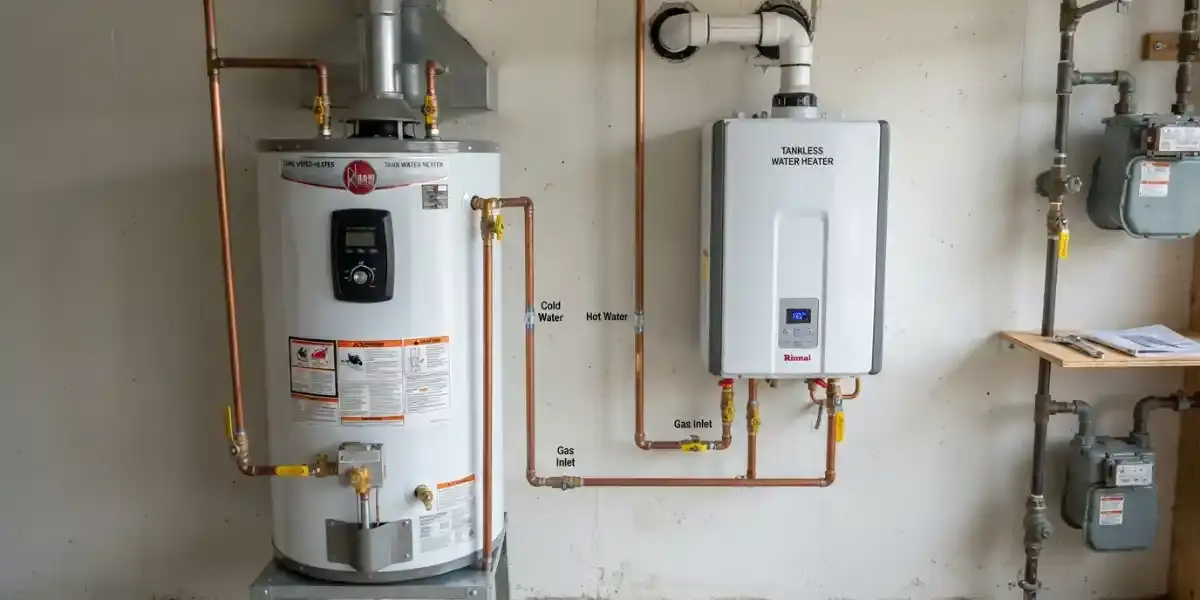
Central system or one unit per apartment
A central system serves the whole building from one mechanical room. It has fewer vents and one maintenance point, but it needs a recirculation loop so tenants far from the plant do not wait for hot water. Pipes and pumps add cost and heat loss.
A per-unit layout puts a small tankless heater in each apartment. Each tenant controls their own hot water, and a failure affects one unit. The trade-off is more vents, more gas meters or branches and more heaters to maintain.
How the two layouts compare
Neither layout is always better. This table lists the factors owners weigh most.
| Factor | Central system | Per-unit heaters |
|---|---|---|
| Upfront cost | Higher plant, lower per-door | Lower plant, higher per-door |
| Venting | One or two stacks | A vent for each unit |
| Hot water wait | Needs a recirculation loop | Short, near the fixtures |
| Service impact | A failure affects everyone | A failure affects one apartment |
| Gas supply | Large single line | Branch lines and meters |
A plumber and a mechanical designer should size the plan for your building.
Gas capacity and venting come first
A tankless unit uses a lot of gas for a short time. In a building, the gas meter and the supply line must support every unit running at once, and many older buildings have a line sized for tank heaters. A gas utility and a licensed plumber must confirm capacity before you buy.
Venting is the other early check. Tankless units need either power vents or concentric direct vents, and a vent route through the roof or exterior wall. In a multi-story building, vent length and clearance can decide the layout before anything else.
Questions to answer before choosing a layout
Answering these first saves rework and keeps the quote realistic.
- How many units and bathrooms does the building have, and how many peak at once.
- What is the gas meter size, and will the gas utility upgrade it if needed.
- Where can vents terminate, and what are the clearances to windows and property lines.
- Do tenants pay for their own gas, or does the owner pay for hot water.
- Who will service the system, and how fast can parts be had.
Cold incoming water in Utah winters
A tankless heater raises the temperature of incoming water by a fixed amount at a given flow. In winter, incoming water is colder, so the same unit delivers less flow at the same temperature. Pleasant Grove winters are cold enough that sizing should use a cold-weather design temperature, not a summer number.
If a building has a shared supply line, winter demand peaks in the morning when many tenants shower. That peak sizes the plant, so ask your plumber to size for the busiest winter morning.
What to check locally
Pleasant Grove adopts and enforces building and plumbing codes, and permits are required for gas and water heater work in most cases. Ask the city building department what applies to your building and whether the project needs plans reviewed. Utah requires licensed contractors for plumbing and gas work, and the state licensing division lets you check a license.
Source type: City of Pleasant Grove building department and Utah Division of Professional Licensing
Maintenance and water quality
Tankless heaters need yearly descaling in areas with hard water, and Utah County water carries dissolved minerals. A building owner should budget for flushing and for a filter or softener where scale is a problem. Our water softener and filtration page explains how to test first.
If you own several buildings, plan service across them. For a small building in a nearby town, our pages for Lindon and American Fork list where we dispatch, and water heater installation covers the standard process.
Planning the swap around tenants
Changing a building's water heating affects every tenant, so plan the schedule early. A per-unit install needs access to each apartment, and a central plant needs a day or more with the building's hot water off. Give tenants written notice and a clear window, and ask the plumber for a realistic duration for each unit.
Keep a spare plan for a failed install day. A temporary heater or a staged schedule keeps tenants from going without hot water overnight.
Costs owners forget to include
The heater price is only part of the bill. These items often decide whether a plan is affordable.
- Gas meter or line upgrades from the utility.
- Vent runs through roofs and exterior walls, including flashing and patching.
- Electrical outlets and condensate drains for each unit.
- Permits, plan review and inspection fees.
- Descaling kits, filters and a yearly service plan for every heater.
Code, safety and paperwork for a building project
A building water heater is more than a purchase. Gas appliances need combustion air, correct venting and a gas shutoff within reach, and many cities require carbon monoxide alarms near fuel burning equipment. Ask the Pleasant Grove building department which standards apply to your building and which inspections are needed before tenants return to normal use.
Keep every permit, inspection sign off and manual in one folder for the building. A new owner, an insurer or a lender may ask for them, and a clear record also speeds any later repair.
Finally, post a simple notice by each heater with the shutoff locations and the number to call. In a building with many tenants, a clear label saves minutes when something goes wrong.
Apartment tankless questions
Not always. Tankless avoids standby losses, but a central system with a recirculation loop can lose heat in the pipes. A designer can model your building.
One unit often serves a small apartment. A large unit with several baths may need a higher capacity model or two units.
Sometimes. A boiler plant that serves heating and hot water is different from a standalone heater, and a mechanical designer should look at the system.
It varies by lease. Individual heaters let the tenant pay their own gas, while a central plant is usually an owner expense.
In most cases, yes. Ask the Pleasant Grove building department, and your plumber can usually pull the permit.
We handle small buildings. For large complexes, we say plainly if a bigger contractor is a better fit.