
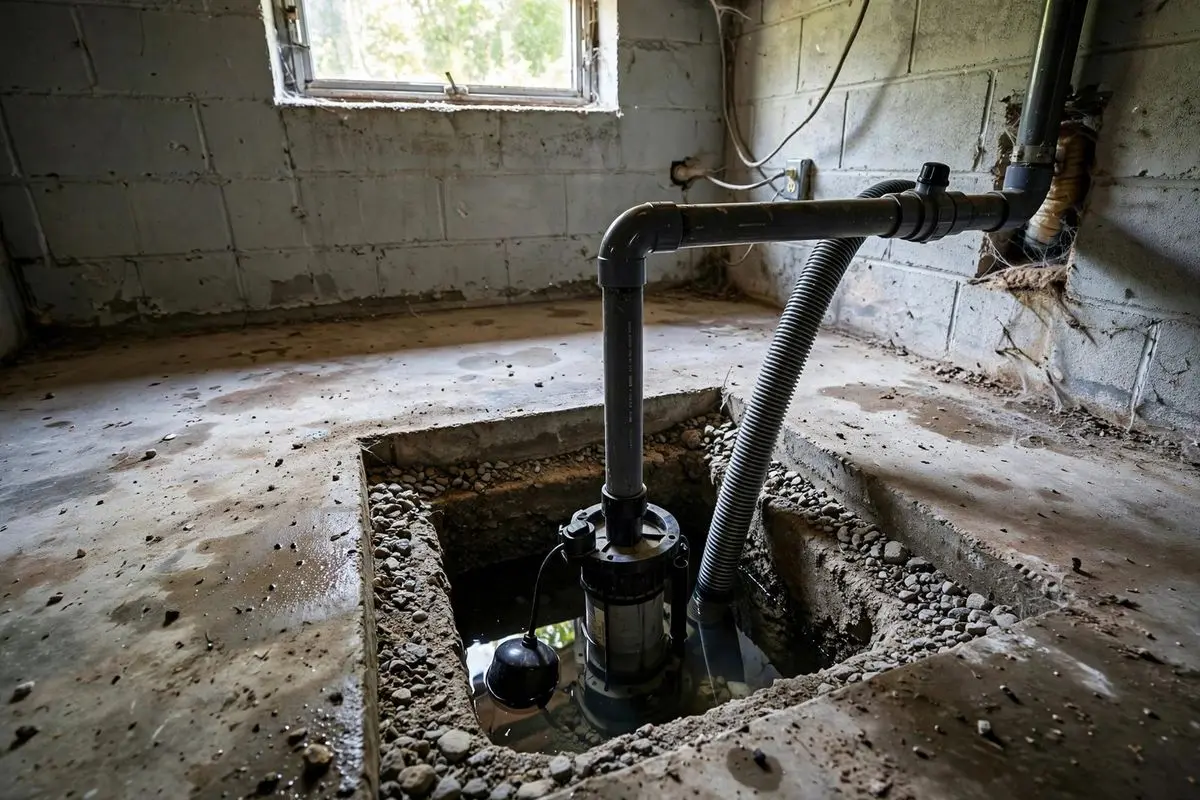
Symptoms, causes and fixes
Most failures follow a pattern.
| Symptom | Likely cause | Usual fix |
|---|---|---|
| Does not start | Float stuck, no power, tripped GFCI | Free the float, reset power |
| Hums but does not pump | Jammed impeller, bad capacitor | Clear the intake, replace the pump |
| Runs nonstop | Float stuck up, failed check valve | Free the float, replace the valve |
| Pumps but water returns | Failed check valve | Replace the check valve |
| Short cycles | Small pit, bad float | Adjust float, resize pit |
| Loud or rattling | Debris in impeller | Clean or replace |
Checks you can do yourself
Work only with the power off and dry hands, and never reach into a pit where a pump could start.
Unplug the pump
Pull the plug first, and confirm the outlet is a GFCI that tests normally.
Check the float
Lift the float by hand and look for a tether that is tangled or a float stuck on the pit wall.
Clear the intake
Remove debris from the screen if you can reach it safely.
Test
Plug in, pour a bucket of water into the pit and watch the pump start and shut off.
The part people forget
The check valve sits on the discharge pipe above the pump and stops water from draining back into the pit after each cycle. A failed valve makes the pump run more often, and the water the pump just moved falls back in. That wears out the motor.
Replacing a check valve is a small repair and costs far less than a new pump. If you hear water rushing back after the pump stops, the valve is likely failing.
How to decide
A pump older than seven to ten years is near the end of its life, especially if it runs often. If the pump is newer and the fault is a float or a check valve, repair makes sense. If the motor is burned out or the housing is cracked, replacement is the answer.
Consider a battery backup at the same time. Power outages often come with storms, and a backup keeps the pit emptied. Our sump pump repair page covers the options.
Why pumps matter here
Pleasant Grove sits at the base of the Wasatch Range, and spring snowmelt and heavy storms can raise groundwater around foundations. Some neighborhoods near creek channels and lower benches see seasonal seepage that others never do. Test your pump before spring and after any big storm.
Source type: General Utah County groundwater and drainage practice
If the pit is filling and the pump is dead
A pit that fills with no pump running can overflow within an hour in heavy runoff.
- Do not step into water if outlets or appliances are wet.
- Move belongings off the floor.
- Use a wet vacuum or bucket to hold the level if it is safe.
- Call (385) 488-1892 and describe what you hear from the pump.
When the problem is the basement, not the pump
A pump that runs constantly may be handling more water than it should. If water enters through the floor or walls, you may need drainage work, and our page on basement waterproofing explains the options. Backups in the discharge line can also overflow a pit, and drain cleaning may help.
If your property is in Cedar Hills or American Fork, see our pages for Cedar Hills and American Fork for local notes.
Maintenance that extends a pump's life
A pump that is tested and cleaned lasts longer and fails less often.
- Test the pump twice a year by pouring water into the pit.
- Clean the pit of silt and debris, since grit wears the impeller.
- Check that the float moves freely and does not touch the pit wall.
- Look at the discharge pipe and its outlet for ice or blockage.
- Replace the battery in a backup system on the maker's schedule.
What to look for in a new pump
Horsepower is not the only number that matters. The head, which is how high the pump must lift water, and the flow rate at that head, decide whether a pump can empty your pit during heavy runoff. A plumber measures the lift from the pit to the discharge outlet and picks a pump that delivers the flow you need at that height.
A cast iron housing handles heat better than plastic, and a vertical float is more reliable in a narrow pit. Ask about the warranty and about who services the pump if it fails.
Getting a pump ready for spring melt
Utah snowpack melts in spring, and the water table near the Wasatch Range rises with it. Test the pump in early spring before the melt peaks, and clear the pit of silt. Check the discharge outlet for ice, since a frozen outlet can make a good pump useless.
If your pump is old, replace it before the season, not during it. A new pump installed on a dry day costs less than an emergency visit at midnight, and you can add a backup at the same time. Keep the plumber's number where you can find it quickly.
Why a battery backup is worth considering
Storms that raise groundwater also knock out power, and a pump with no electricity is just a bucket. A battery backup runs the pump for hours, and some systems send an alert to your phone when the main pump fails. For a finished basement, the cost is small compared with the loss.
Test the battery twice a year and replace it on the maker's schedule. A dead backup battery is the most common reason a backup system fails when needed.
What not to do around a pit full of water
A sump pit looks harmless, but water and electricity share the space.
- Do not step into water or reach into the pit with the pump plugged in.
- Do not carry the pump by its power cord.
- Do not bypass a tripped GFCI outlet to keep the pump running.
- Do not run a gas generator in the basement or garage.
- Do not pour chemicals into the pit.
Submersible pump questions
Many last seven to ten years, depending on how often they run. Heavy use shortens the life.
No. Sewage needs a pump designed for solids. A sump pump is for groundwater and storm water only.
A high water table, a stuck float or a failed check valve can cause it. A plumber can trace the cause.
Yes, it is a safety device near water. If it trips often, call an electrician.
Away from the foundation and not onto a neighbor's property. Ask your plumber about local rules.
It depends on the water volume and the height the pump must lift. A plumber can size one for your pit.