
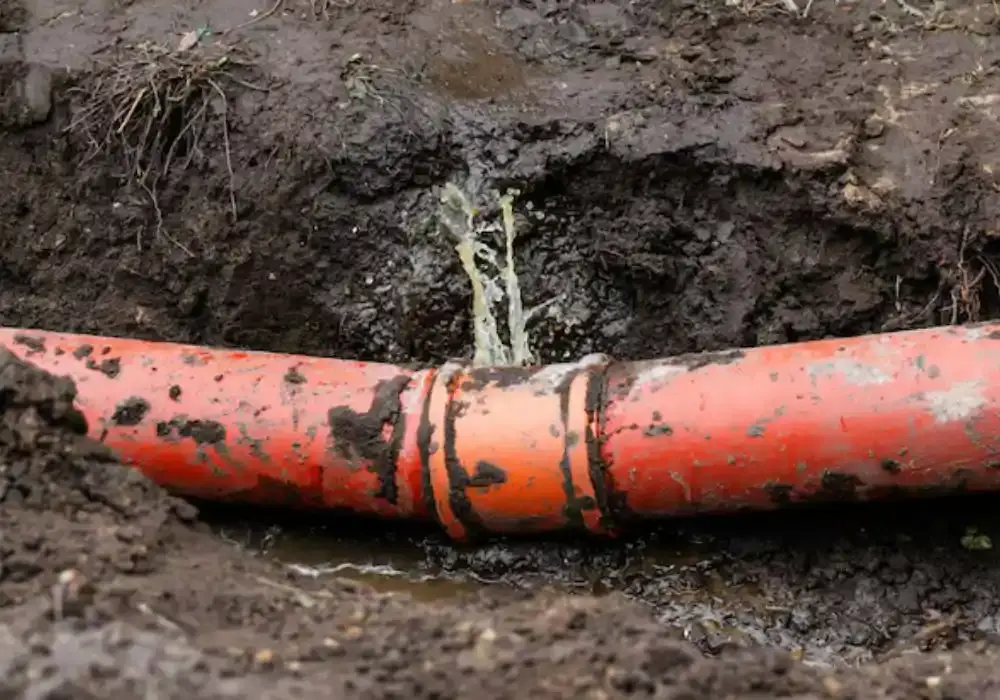
Signs inside the house
Indoor signs usually appear first, and they often start small.
- More than one fixture drains slowly at the same time.
- Toilets gurgle or bubble when a tub or washer drains.
- Water backs up in the lowest drain, often a basement floor drain.
- A sewer smell near drains that does not clear.
- Clogs that return within weeks of cleaning.
Signs in the yard and at the foundation
Outdoor signs point to a break in the buried line.
- A lawn patch that is greener, wetter or lusher than the grass around it.
- A sunken area or sinkhole along the line path.
- Cracks in the foundation or slab, though these have other causes too.
- A sewer odor near the cleanout or the yard.
- Rodents or insects entering from the yard, which can follow a broken line.
What damages sewer lines in Pleasant Grove
Roots are the leading cause in a city known for mature trees. They enter at joints and cracks and grow until they block the pipe. Age is another cause, since older clay and cast iron pipe crack, corrode and shift.
Soil movement and freeze and thaw cycles stress pipe, and a poorly bedded line may belly and collect waste. Heavy loads such as a driveway built over a line can crush it. Each cause leaves a different mark on a camera inspection.
How a camera finds the problem
A plumber clears enough of the line to run a waterproof camera from a cleanout. The screen shows roots, cracks, offsets and low spots, and a counter marks the distance of each defect. You get video and a summary, and you see what the plumber sees.
A camera look is the best single step before a repair. Our sewer inspection page explains the process, and the camera often decides between cleaning and repair.
What a repair can look like
The right choice depends on the finding.
| Finding | Usual response |
|---|---|
| Roots in a joint, pipe otherwise sound | Cut roots and monitor, or line the joint |
| Cracked section | Spot repair or liner |
| Collapsed or offset section | Dig and replace the section |
| Whole line brittle or bellied | Replace the line or line the full length |
Utah's Blue Stakes 811 service must mark buried utilities before any excavation.
Who owns what in Pleasant Grove
The city owns the sewer main in the street, and wastewater from the city is treated by the Timpanogos Special Service District. You generally own the lateral from the house to the main. If a backup affects the whole street, call Pleasant Grove public works. If it affects only your house, the problem is likely on your lateral.
Source type: City of Pleasant Grove public works and Timpanogos Special Service District
What to do if you see the signs
Do not wait for a full backup. Schedule a camera inspection, and if you are close to a backup, stop using water and call the 24/7 line. Early action keeps the repair small.
If you live across a border, see our pages for American Fork and Lindon to see where we dispatch. For a line that is blocked right now, sewer line cleaning opens it first.
Sewer checks when you buy a Pleasant Grove house
The sewer lateral is one of the most expensive hidden parts of a house, and a home inspection rarely looks at it.
- Ask for a camera inspection during the inspection period.
- Ask the seller about past backups, root cutting and repairs.
- Find the cleanout and see whether it is accessible.
- Look at the age of the home and the trees near the line.
- Keep the video, since it supports a repair request or a price change.
How repairs are priced and timed
Sewer repairs vary widely, because depth, length, access and surface restoration drive the price. A short spot repair in an open yard costs far less than a long replacement under a driveway. A plumber should give you a written price after the camera shows the real condition, and explain the alternatives.
Timing matters too. A repair planned in dry weather costs less and disrupts less than one done during an emergency backup. If the camera shows a defect but the line still flows, you can often schedule the work for a convenient week.
Why an early repair beats an emergency backup
A damaged sewer line rarely fails all at once. Roots widen, joints shift and flow slows, and each week the odds of a backup rise. Repairing at the first sign lets you pick the date, compare methods and avoid cleanup in the house.
A backup brings extra costs that a planned repair does not. Cleanup, drying, damaged flooring and lost use of the house add up quickly, and many insurance policies limit coverage for sewer backups. A camera look now is a small cost compared with these risks.
What to remember
Slow drains in several fixtures, gurgling and outdoor wet spots are the signs to act on. A camera inspection confirms the problem, and an early repair costs less than a backup.
Know where your cleanout is, keep the number for the plumber handy and call the city if neighbors are affected too. These small steps shorten any emergency.
Cleanouts and slope are code items
The model plumbing code, applied in Utah with state amendments, sets slope and cleanout requirements for drain lines. A lateral with no cleanout or a section that has lost its slope is a defect a camera can document, and it supports a request for repair or a price change.
Sewer line sign questions
Slow drains that return after cleaning and a line that passes near large trees are clues. A camera shows roots directly.
Often not for wear or roots, though some policies offer an endorsement. Read your policy and ask your insurer before work starts.
A spot repair with good pipe can last decades. A liner often lasts many years. The plumber can explain expected life with the quote.
Sometimes, if the camera shows a minor issue. A crack or root intrusion usually gets worse, and waiting risks a backup.
A capped pipe a few inches wide, usually outside near the foundation. The plumber can help you find it.
Often yes for a dig or a replacement. Your plumber can pull it or tell you what Pleasant Grove requires.