
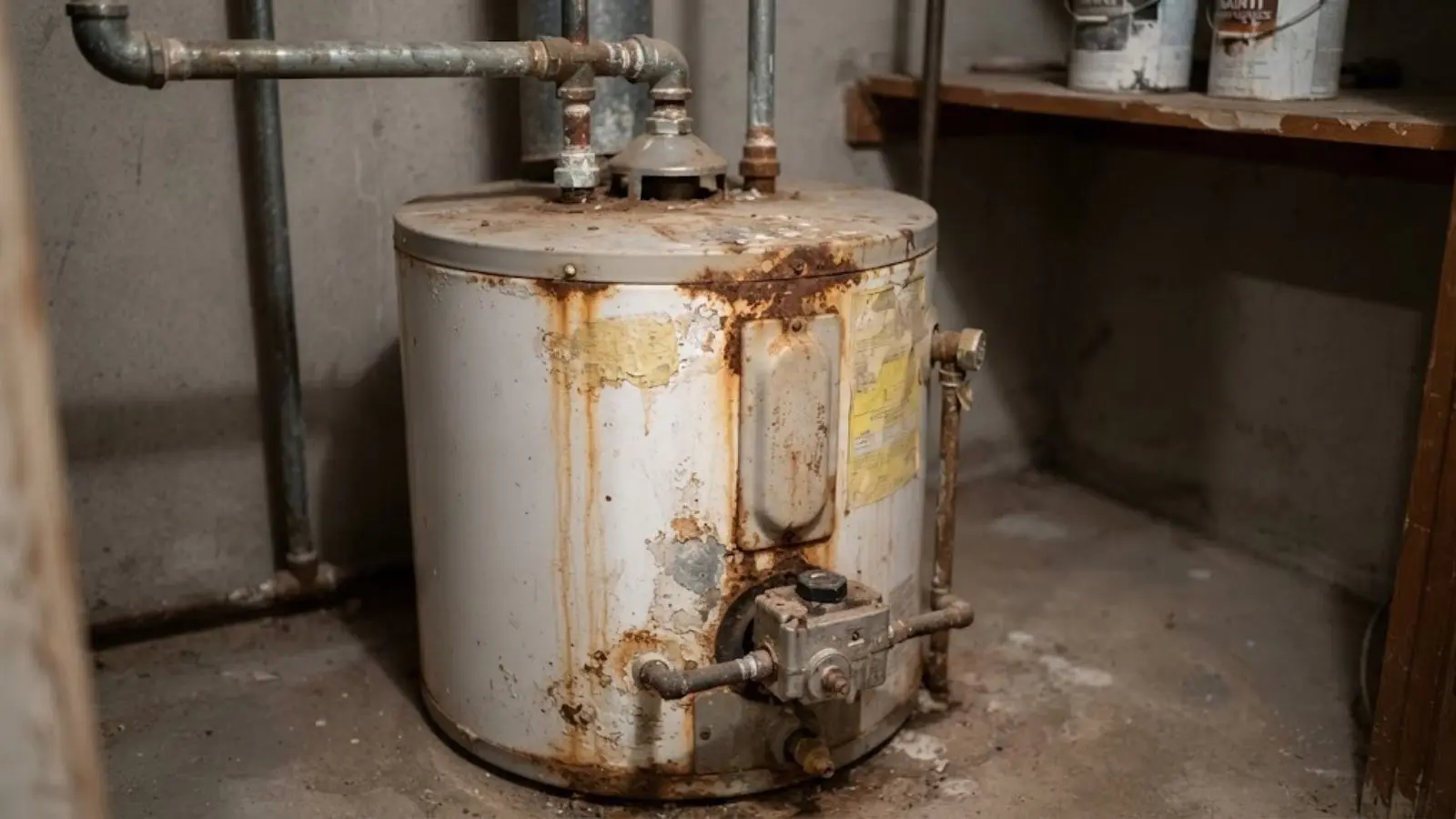
First steps for a leaking water heater
A leaking heater can scald, flood or create an electrical hazard. These steps come first.
- Turn off the power at the breaker for an electric heater, or set a gas heater's control to off or pilot.
- Close the cold water supply valve on top of the heater.
- Do not touch a leaking electric heater if you are standing in water.
- Place a bucket or pan, and open a hot tap to relieve pressure.
- If you smell gas, leave the house and call 911, then call us.
Where the leak comes from and what it means
The place the water appears tells you whether a repair is possible.
| Where | Likely cause | Repair or replace |
|---|---|---|
| Top fittings or pipes | Loose or corroded connections | Repair |
| Relief valve or discharge pipe | High pressure or temperature, bad valve | Repair the valve, check pressure |
| Drain valve at the bottom | Loose or worn valve | Repair |
| Tank body or bottom | Corrosion through the tank | Replace the heater |
| Condensation on the tank | Cold water and humid air | Not a leak, wipe and monitor |
Water pooling under the tank with no fitting leak almost always means the tank has failed.
What kills a tank heater
Inside a steel tank, a rod called an anode corrodes first to protect the tank walls. Once the rod is used up, the tank itself begins to rust. Sediment from hard water settles in the bottom, insulates the water from the burner and speeds the damage.
Most tank heaters last about ten to fifteen years. If yours is older and leaking from the tank, repair is not possible. See water heater repair for the cases that can be fixed.
Signs a tank is near the end
Replacing a heater before it leaks costs less than cleaning up after it does.
- Rust colored hot water.
- Rumbling or popping noises from sediment.
- Moisture or rust at the base of the tank.
- A heater over ten years old, especially in hard water.
- Fluctuating hot water temperature.
Local water and scale
Utah County water carries dissolved minerals, and heaters in Pleasant Grove homes often show sediment in the bottom of the tank. Flushing a tank once a year removes some of it. Pleasant Grove requires permits for most water heater replacement, so ask the building department what applies to your job, and note that gas appliances need proper venting and a safe gas connection.
Source type: General Utah County water quality and City of Pleasant Grove building department
What happens after the leak
If a tank has leaked, check the floor and the wall behind it for dampness. Dry wet materials within a day or two to prevent mold. Photograph the damage for your insurer. Many policies cover sudden leaks, but not damage from slow leaks.
A plumber can replace a tank heater in a few hours in most cases. For a tankless alternative, tankless water heaters are an option if you can plan. If your home is near Cedar Hills or Highland, see Cedar Hills and Highland for where we dispatch.
What to decide when the heater has failed
A failed heater forces a quick decision, and a few questions make it easier.
- How many people use hot water, and at what times.
- Whether you want to stay with gas or electric, or change fuel.
- Whether a tankless unit is worth the extra cost and venting work.
- Where the heater sits, and whether it needs a drain pan.
- What warranty the heater carries on the tank and the parts.
Keeping the next heater from leaking
Flush the tank once a year to remove sediment, and check the anode rod every few years, since a spent rod lets the tank rust. Test the relief valve by lifting the lever briefly, and call a plumber if it drips or will not reseat.
Install a drain pan with a drain line to a floor drain, so a small leak runs to a safe place. For a heater in a finished area, a water alarm on the floor gives early warning of a leak.
Safety differences between electric and gas heaters
An electric heater leaks onto live heating elements, so the first step is to cut power at the breaker. Do not touch a leaking electric heater while standing in water. A gas heater needs its gas control turned to off or pilot, and any smell of gas means you should leave and call for help.
Both types need the cold water supply closed to stop the flow. After that, a plumber confirms the source of the leak, checks the venting on a gas unit and tells you whether repair or replacement makes sense. Replacement is the usual answer when the tank itself is leaking.
When to call the 24/7 line
Call right away if water is pooling around the heater, if the leak is from the tank or if you smell gas or see scorched wiring. Call during business hours for a slow drip at a fitting or a damp relief valve pipe.
Either way, tell the dispatcher the age of the heater, the fuel type and where the water is coming from. That lets the plumber bring the right parts, and it speeds the repair or replacement.
Why the relief valve exists
The temperature and pressure relief valve is a required safety device under the International Plumbing Code, which Utah applies statewide with amendments. If it discharges, the tank is too hot or the pressure is too high. Do not cap the discharge pipe, and have a plumber find the cause.
Leaking heater questions
It can be. Water near electric components is a shock risk, and a gas heater that leaks may have other problems. Turn off power or gas and water.
No. A tank that leaks has corroded through, and patches do not hold. Replace it.
High pressure or temperature, or a worn valve, can cause it. A plumber should check pressure and the thermal expansion setup.
It depends on the leak. A fitting drip may take days, but a tank failure can release the contents in minutes.
Often for sudden damage to the home but not for the heater itself. Read your policy.
Yes. Our 24/7 line dispatches a plumber for leaks and no hot water.