
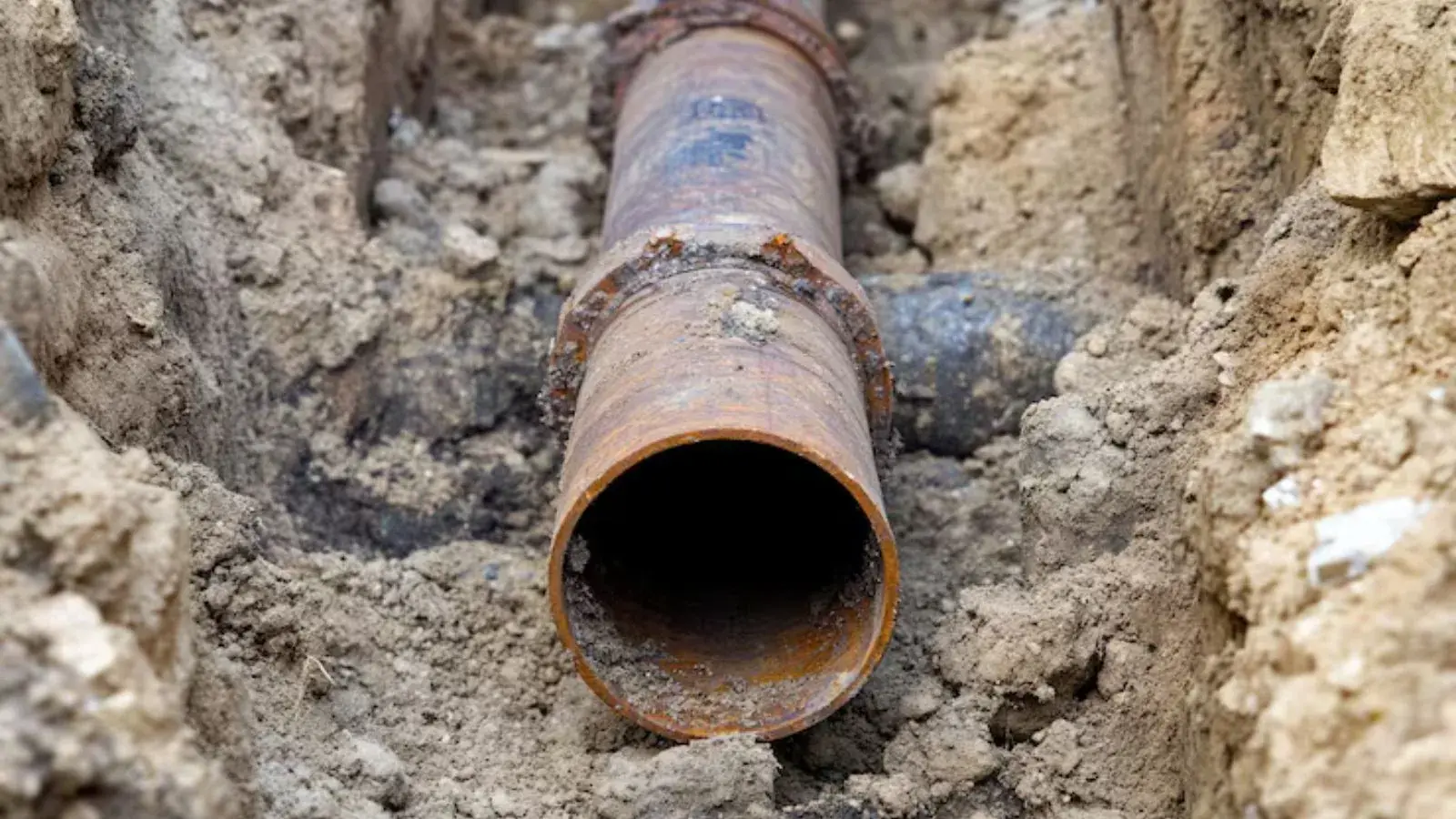
How to tell if your pipes are galvanized
Look at exposed pipe near the water heater, the main shutoff or under a sink. Galvanized pipe is dull gray and threaded at the joints, with a rough surface. A magnet sticks to it, and a scratch with a key reveals silver, not copper color.
Copper is orange or brown and a magnet does not stick. PEX is plastic, usually red, blue or white. If you are unsure, a plumber can identify the pipe in minutes.
What happens inside galvanized pipe
The zinc coating protects the steel for decades, then it wears thin and rust forms inside. Rust builds up on the pipe wall and narrows the opening, so flow drops long before a pipe leaks. Corrosion is worst at threaded joints, where the zinc is thinnest.
Mixed systems add another problem. Where galvanized pipe meets copper, dissimilar metals corrode each other, so a partly updated home can have leaks at the joint.
Signs galvanized pipe is failing
These signs usually appear together.
- Water pressure that has slowly fallen over the years.
- Brown or orange water after the house has sat idle.
- Weak flow at the farthest fixtures.
- Leaks at threaded joints or pinholes along the pipe.
- Pipe that sweats or shows rust blooms on the surface.
Repair, partial replacement or full repipe
The best choice depends on how much of the home has galvanized pipe and how bad it is.
| Option | Best for | Trade-off |
|---|---|---|
| Spot repair | One leak in otherwise sound pipe | Neighbor sections may fail next |
| Partial replacement | One bath or one wall with trouble | Leaves old pipe elsewhere |
| Full repipe | Widespread corrosion or repeat leaks | Highest cost, longest solution |
| Replace the service line | Low pressure at the meter | Separate from interior pipe, see water line repair |
A plumber should test pressure and flow before recommending any option.
Older Pleasant Grove homes
Pleasant Grove has older homes in and around its historic downtown, and the city was settled in the nineteenth century. Homes built before the 1960s are the ones most likely to have galvanized supply pipe, though many have been updated over the years. If you are buying an older home, ask for a pipe inspection before closing.
Source type: City of Pleasant Grove history and building records
Is replacing galvanized pipe worth it
A repipe costs more than a repair, but it removes rust from the water, restores pressure and ends repeat leaks. A home with galvanized pipe may also draw questions from insurers and buyers. Many owners find that two or three repairs cost almost as much as a repipe.
If you are weighing options for a home near Highland or Lindon, our pages for Highland and Lindon show where we serve, and burst pipe repair covers emergencies.
Galvanized pipe and the sale of a home
Old supply pipe can affect a sale, an insurance quote and a negotiation. These steps help either side.
- Ask for a plumber's report on pipe material and condition before listing or closing.
- Test water pressure at a few fixtures and note the results.
- Ask your insurer whether galvanized pipe changes coverage or the premium.
- Get a written repipe quote so a buyer can see the real cost.
- Keep receipts for any partial replacement already done.
What rusty water does and does not mean
Brown or orange water after the house has been idle is common with corroded galvanized pipe, and it usually clears after the tap runs for a minute. The color comes from iron oxide and is mostly cosmetic, but it stains laundry and fixtures and signals that the pipe wall is thinning.
If you have health questions about lead or other metals in your water, a lab test and your physician are the right sources. We do not make health claims about tap water, and a test of your own tap tells you more than any general statement.
What a repipe involves in an older home
A repipe in an older house usually follows the old routes through walls, attic and crawl space, and a plumber opens small access holes at key points. Drywall patches are limited, and the plumber leaves them ready for finishing. Water is off for part of each day, and the plumber tells you the schedule in advance.
Plan for finishing work after the plumbing is done. Drywall, paint and sometimes tile belong to other trades, and scheduling them together saves time and keeps the home usable.
Myths about old pipe that cost homeowners money
One myth says that low pressure always means the city has a problem. In an older house it more often means rust inside the pipe. A pressure gauge on a hose bib at the street side of the house tells you what arrives, and weak flow indoors points to the pipe.
Another myth says that a paint-on pipe coating can fix galvanized pipe. Coatings do not restore a corroded pipe wall and can hide a failing section. A third says that replacing one leaking section solves the problem. It often does for a while, then the next weak joint fails.
A simple way to start
If you suspect galvanized pipe, start with a short visit. A plumber identifies the material, tests pressure at a few fixtures and tells you how much life is left. You leave with facts, not a sales pitch, and you can plan the work for a convenient season.
Take photos of exposed pipe near the water heater and under sinks before the visit. They help the plumber prepare, and they give you a record to compare against later.
Galvanized pipe questions
The main concern is rust and reduced flow. Old galvanized pipe may also have lead at joints in some cases. A water test tells you more.
Yes, until it fails or flow drops too far. Many homes live with it for years, but it will not improve.
Many homes take two to five days depending on size and access.
Often yes when galvanized restriction is the cause. A plumber tests the system to confirm.
Yes, with the right transition fittings. The plumber will choose them to avoid dissimilar metal corrosion.
Usually for a repipe. Ask the Pleasant Grove building department or your plumber.